

If you're moving to Navrangpura, Ahmedabad from Mumbai, Pune, Nagpur, Jaipur, Delhi, or anywhere outside Gujarat, the first two weeks will feel less like "settling into a new city" and more like decoding a whole new operating system — one built around sweet-tinged thalis, sunset dinner deadlines, and auto drivers who can smell an out-of-stater from two lanes away. This guide breaks down exactly what to expect and how to handle it, block by block.
- 1. The Culture Shock Nobody Warns You About
- 2. Where to Actually Eat: Mess Halls, Dining Halls, and Thali Spots
- 3. Five Gujarati Survival Phrases for Auto Drivers and Shopkeepers
- 4. Surviving Ahmedabad's Climate: Summer Fire, Monsoon Floods
- 5. Moving to a New Home (Hostels vs PGs)
- 6. About City House Girls PG
1. The Culture Shock Nobody Warns You About
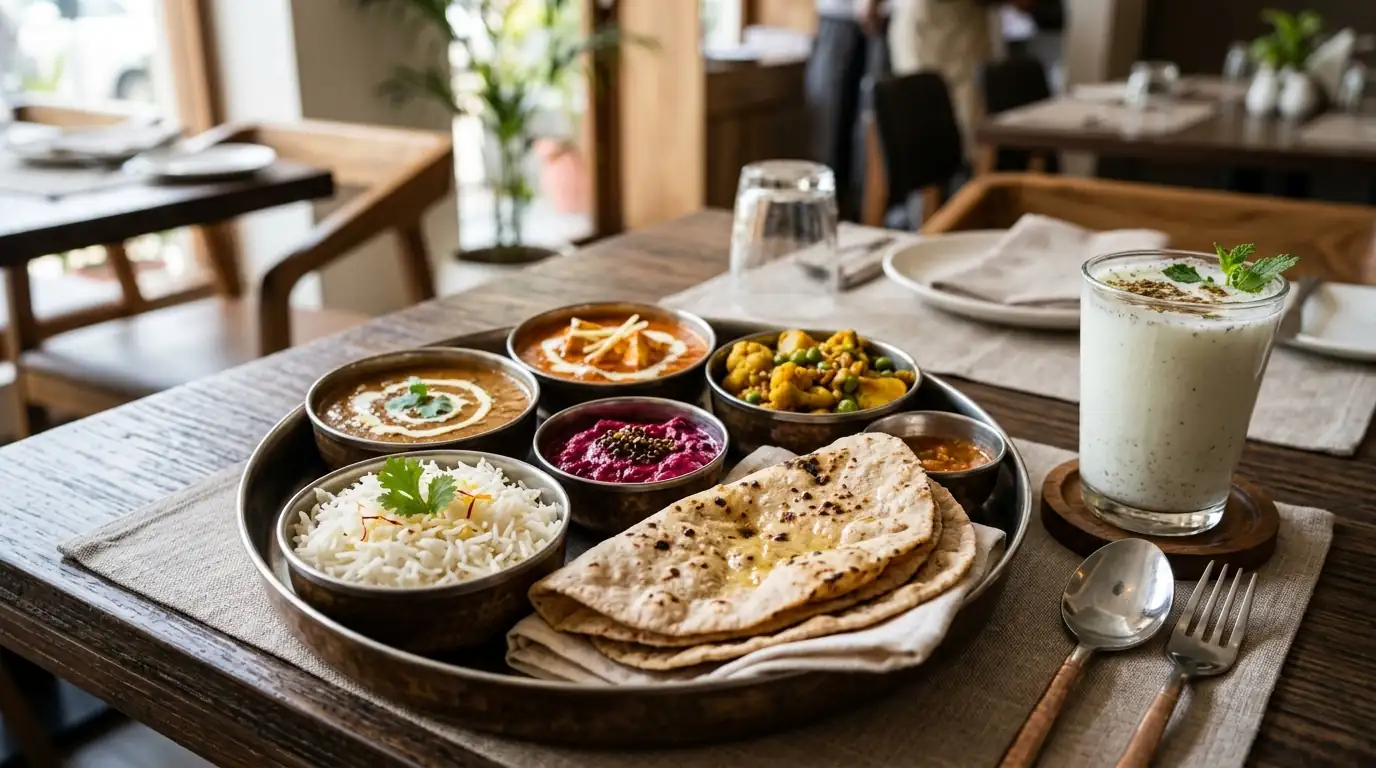
🍲 2026 Food Options Note: Out-of-state students enjoy 100% pure vegetarian, home-style meals cooked daily in small batches, with options for late dinner plates reserved for students with late lectures.
The "sweet tinge" is real — but not the way you've heard
Gujarati cuisine is predominantly lacto-vegetarian — vegetables and dairy, no meat, fish, or eggs — and it leans heavily on ghee and oil, with sweets and desserts showing up as a normal part of meals, sometimes even breakfast. If you're from Maharashtra, Rajasthan, or Delhi, the shock isn't that everything is sugary (it mostly isn't), it's that the baseline is sweeter than what you're used to. Curries that would be purely savory back home get a faint jaggery or sugar note here — especially in Ahmedabad-style home cooking specifically, more so than in Surat or Kutch cuisine.
The tell-tale sign you've landed in Gujarat: most dining tables carry a salt shaker and a sugar shaker side by side, instead of the salt-and-pepper combo you're used to. Locals will casually add a pinch of sugar to dal or kadhi at the table — don't be alarmed, just don't assume the cook oversalted (or over-sugared) your food. It's often meant to balance the meal, not a mistake.
- Practical tip: If a dish tastes off to you, ask if it's the restaurant's regular style before writing the place off — most Navrangpura places will happily tell you which of their dishes lean sweet and which don't.
Jain and Swaminarayan food rules aren't a niche request — they're the default in many places
Because Gujarat's food culture is deeply shaped by Jain and Swaminarayan communities, you'll find that:
- No onion, no garlic, no potato thalis are a common baseline in many mess halls and dining halls — not a special "Jain menu" tacked on the side. If you're used to onion-garlic-forward Punjabi or Maharashtrian cooking, this can feel bland at first. Ask specifically for "Punjabi thali" or "North Indian thali" if you want the onion-garlic version — most places in Navrangpura offer both.
- Swaminarayan-following establishments avoid serving after sunset. This directly affects your dinner planning: several dining halls in the area close between 9:00–9:45 PM, which catches late-study-session students off guard more than once. Set a phone reminder for dinner by 8:30 PM until you learn each place's actual hours.
- Restaurants increasingly label dishes clearly as "Jain," "vegan," or "no onion-garlic" on the menu — once you know to look for the label, ordering gets a lot easier.
A phrase worth knowing for the culture
Locals sometimes quote the old saying that dining in Surat and dying in Varanasi is the way to heaven — a nod to how central food pride is here. Expect to be interrogated (kindly) about whether you liked your meal, and expect genuine pride if you say yes.
2. Where to Actually Eat: Mess Halls, Dining Halls, and Thali Spots
Skip the guesswork — here's a working shortlist by category, pulled from what's actually rated well on the ground right now.
Budget student mess (₹45–130/thali, unlimited-style)
- Umiya Dining Hall (near the Fire Station, Navrangpura) — 4.9★ rating, known for an unlimited Kathiyawadi thali around ₹130 that reviewers repeatedly describe as tasting homemade.
- L.D. Mess and New Saurashtra Mess (University Area, near L.D. Engineering College) — the classic ₹45–60 hostel-style thali: two sabzis, dal, rice, rotis, salad, and buttermilk. L.D. Mess actually runs multiple mess counters with different daily menus under one roof, so you can pick whichever suits your mood.
- Shri Swaminarayan Dining Hall (Gulbai Tekra, near the University Road passport office) — does both Gujarati and Punjabi thalis at a ₹50 fixed price, making it one of the few budget spots that directly caters to homesick North Indian palates.
Jain and pure-veg specialty spots
- Sabrosa (Vijay Cross Road) — one of Gujarat's only restaurants running an entirely Jain menu (no onion, garlic, or potato) in a proper fine-dine setting. Pricier, but worth it for a "treat yourself" meal when you're missing variety.
- Jain Bhojanshala (Navrangpura Gam) — a no-frills, community-style Jain kitchen (no onion, garlic, potato, or even buttermilk in some preparations) at roughly ₹125/plate. This is where local Jain families eat daily lunch — a genuinely authentic, unpretentious option.
North Indian and Rajasthani cravings
- Hari Om Restaurant (Swastik Cross Road, Navrangpura/CG Road) — serves Gujarati, Punjabi, and Rajasthani thalis under one roof at around ₹200/person, and is consistently the go-to recommendation for homesick North Indian students in the area.
- Navrang Restaurant (Vijay Char Rasta) — a long-running, reasonably priced vegetarian North Indian menu with an unlimited option, right in the heart of Navrangpura.
- For a proper dal-baati-churma fix, Rajasthani Tadka and Royal Rajasthani Restaurant near Satellite/Shyamal Cross Road are a short auto ride away and worth it for weekend cravings.
3. Five Gujarati Survival Phrases for Auto Drivers and Shopkeepers
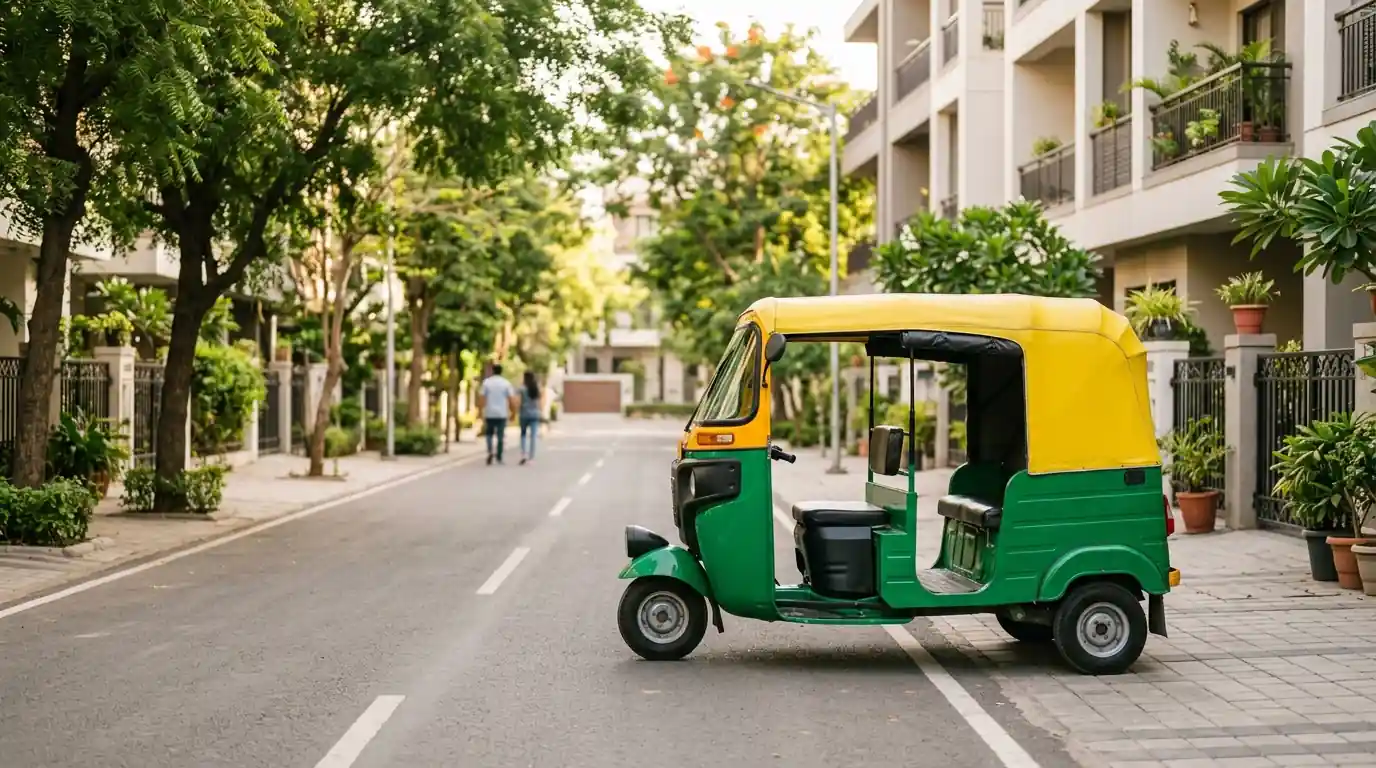
Ahmedabad's auto drivers and shopkeepers usually speak enough Hindi or English to get by — but using even basic Gujarati signals you're not an easy target for overcharging, and it noticeably changes how you're treated at spots like Navrang Circle and Vijay Cross Road.
1. "Meter pramaane chalsho?" (મીટર પ્રમાણે ચાલશો?) — "Will you go by the meter?" Your default opener before any transaction at Navrang Circle. The official minimum auto fare is ₹25 (and ₹20 per km after). If a driver refuses the meter outright, look for another auto or use Uber Auto.
2. "Bhai, aatlu badhu na hoy. Baaju ma j javu che." (ભાઈ, આટલું બધું ના હોય. બાજુ માં j જવું છે.) — "Brother, it cannot be this much. I am just going nearby." Used when a driver quotes a flat rate (like ₹100 for a short distance). It signals familiarity and cuts through standard price hiking.
3. "Aano shu bhaav chhe?" (આનો શું ભાવ છે?) — "What is the price of this?" Your default shopping query at local markets near Law Garden or Swastik Cross Roads.
4. "Thodu vaajbi karo ne, hu ahiyaa j rahu chhu." (થોડું વાજબી કરો ને, હું અહીંયા j રહું છું.) — "Make the price reasonable, I live right here." Shopkeepers are far more likely to give you the standard local rate if they think you will be a repeat customer.
5. "Bhai, thodi chaas aapo ne." (ભાઈ, થોડી છાશ આપો ને.) — "Brother, please give me some buttermilk." Ordering chaas casually at food stalls instantly blends you into the local culinary baseline.
- Etiquette Tip: Auto drivers and shopkeepers in Gujarat respond well to respect. Attempting basic Gujarati shows respect and usually results in better service. Always wrap up a negotiation with a polite "Dhanyavaad" or the more distinctly Gujarati "Khoob khoob aabhaar" (thank you very much).
4. Surviving Ahmedabad's Climate: Summer Fire, Monsoon Floods
Summer (roughly March–June): Plan your day around the sun, not the clock
Ahmedabad's summer is dry-heat brutal — daytime highs regularly cross 40°C and can surpass 45°C, with nights rarely dropping below 30°C, so evenings offer little real relief without AC. This is a genuine shock for students from more humid cities like Mumbai or Pune, who tend to underestimate how draining dry heat is compared to what they're used to.
- Avoid the Sun: Structure your commute and outdoor errands to avoid 11 AM–5 PM, when dry winds (Loo) are at their worst.
- Cotton is King: Pack light-colored, breathable cotton clothing over anything synthetic — it makes a bigger difference here than it did back home.
- Sun Protection: A high-SPF sunscreen, sunglasses, and a cotton stole for wrapping your face and head aren't optional extras, they're daily essentials once April hits.
- Hydrate Strategically: Carry a refillable water bottle everywhere and aim for 8–10 glasses of water a day, supplemented by fresh coconut water, lemonade, or local buttermilk (chaas) to maintain electrolyte levels.
Monsoon (June–September, peak in July–August): Waterlogging is a real commute hazard
The monsoon brings real relief from the heat but also disrupts travel, with low-lying stretches around CG Road and parts of Navrangpura prone to waterlogging during heavy spells.
- Commute Safety: Don't assume the rain is just an inconvenience — check road conditions before heading out during a heavy downpour, especially if you're on a two-wheeler or auto.
- Umbrella + Raincoat: Get a proper umbrella-plus-raincoat combo rather than relying on one or the other — Ahmedabad rain can swing from drizzle to sudden downpour fast.
- Rain Shoes: Anti-skid footwear (like clogs or crocs) is worth the investment; canvas shoes take days to dry and are a genuine slip hazard on wet roads.
- Electronics Protection: Use a waterproof or dry bag for your laptop, phone, and documents on your commute.
- Street Food Warning: Stick to home-cooked or mess food over street food during heavy humidity spells — food spoils faster and hygiene risks go up noticeably during monsoon months.
The good news: Winter (November–February) is easy
Winters in Ahmedabad are genuinely pleasant — comfortable temperatures roughly between 12–30°C. If you have any flexibility on your move-in date, arriving in this window gives you a much gentler runway to adjust before your first Ahmedabad summer hits.
5. Moving to a New Home (Hostels vs PGs)
Most PGs in the Navrangpura corridor (and the broader Thaltej/Memnagar/SG Highway belt) advertise "homely meals" as a headline amenity, but actual food quality varies a lot property to property.
- Verify Before Booking: Since most PGs in Ahmedabad require a minimum stay of one to three months with upfront deposits, always ask to sample a lunch or dinner before signing a long-term PG contract. A mediocre mess kitchen is a much bigger daily quality-of-life hit than a slightly smaller room.
- AC is Non-Negotiable: When searching for a comfortable girls PG near CEPT University or neighboring institutes, treat AC as a necessity rather than a luxury if you plan to stay during the summer months (April–June). It directly affects your sleep, recovery, and exam preparation quality.
6. Safe, Comfortable, and Homely: City House Girls PG
Moving to a new city is challenging enough without worrying about food adjustments, water logging, or security. Located right off CG Road (behind Tanishq showroom) in Navrangpura, City House Girls PG offers a safe, managed co-living environment designed specifically for outstation female students and working professionals.
- Outstation-Friendly Food: We serve 100% pure vegetarian, home-style meals with savory North Indian and Gujarati profiles—avoiding the overly sweet dal variations common in local commercial messes.
- Walk to Everything: Bypassing summer heat and monsoon commute struggles is easy when your PG is just a 10-minute walk (700 m) to GLS University (making it perfect if you want a girls PG near GLS University), and within 1.2–1.8 km of CEPT, Gujarat University, and girls PG near HL College of Commerce (just a short 3-4 minute ride or 17-minute walk).
- Central Transit Connectivity: Located just a 4-minute drive from the Commerce Six Roads Metro Station, and an 11-minute walk (900 m) to Gandhigram Metro Station (Red Line), making your cross-city transit clean, dry, and affordable (you can check routes on the official Ahmedabad Metro Rail portal).
- Uncompromised Safety: Features gated premises, 24/7 CCTV surveillance, a resident female caretaker on-site, and a secure Common Living Area for absolute peace of mind.
Frequently Asked Questions
Do outstation students face language barriers in Ahmedabad if they only speak Hindi or English?
No. In student-centric neighborhoods like Navrangpura, CG Road, and University Area, Hindi and English are widely understood and spoken by college peers, auto drivers, shopkeepers, and cafe staff. You will easily manage daily life using Hindi, though learning a few basic Gujarati phrases (like "ketla rupiya" for price and "ahiya ubha rakho" for stop here) helps during street shopping and auto commutes.
How do North and South Indian students adjust to the sweeter taste of Gujarati food?
Commercial Gujarati messes often add jaggery or sugar to everyday dals and vegetable curries, which can take outstation students by surprise. However, central Navrangpura has a rich ecosystem of diverse food choices, including North Indian tiffin centers, Kathiawadi dining halls (which serve spicy, non-sweet curries), South Indian cafes, and Punjabi thalis. Additionally, managed accommodations like City House Girls PG cook savory North Indian and Gujarati profiles specifically balanced for outstation tastes.
How severe is Ahmedabad's summer heat and how should outstation students prepare?
Ahmedabad summers (April to June) regularly reach 42°C to 45°C with dry, intense heat waves (loo). Outstation students should prioritize furnished AC accommodations, wear loose, breathable cotton clothing, carry an insulated water bottle with ORS or glucose, and avoid walking between 1:00 PM and 4:30 PM. Local remedies like drinking freshly churned buttermilk (chaas) and coconut water help maintain hydration.
Is Ahmedabad safe for female students traveling solo late at night from the Railway Station or Airport?
Yes. Ahmedabad is consistently recognized as one of India's safest metropolitan cities for women. If arriving late at night at Kalupur Railway Station, you can either take the direct underground Blue Line Metro during daytime hours or hire prepaid autos and app-based cabs (Uber, Ola) directly from designated terminal gates. For additional protection, Gujarat's dedicated 181 Abhayam Women Helpline operates 24/7 rescue vans across the city.
Which metro station is closest to City House Girls PG for daily college commute?
City House Girls PG is situated within 900 meters (an 11-minute walk) of Gandhigram Metro Station on the Red Line and approximately 1.7 km (a 4-minute auto ride) from Commerce Six Roads Metro Station on the Blue Line. Students can also easily access the Old High Court Interchange Station (1.6 km) to switch between East-West and North-South metro lines.
What documents do outstation students need to submit when checking into a PG in Navrangpura?
When checking into a verified PG, female students are typically required to provide: a valid government photo ID (original Aadhaar Card or Passport for verification, along with photocopies), college admission letter or student ID card, two passport-sized photographs, and emergency contact details for their parents or local guardians.